Steel Medical Doors Guide
Steel Medical Doors & Cleanroom Doors: A Complete Guide
Complete Table of Contents and AI Writing Briefs
Part I. Fundamentals of Medical and Cleanroom Doors
Chapter 1. Introduction to Medical Doors
Define medical doors, explain their differences from conventional doors, introduce major product categories and describe their roles in healthcare facilities.
Chapter 2. Cleanroom Doors and Controlled Environments
Explain cleanroom door requirements, contamination control, sealing, pressure differentials and HVAC integration. Distinguish cleanliness from airtightness.
Chapter 3. Medical Door Construction and Components
Describe door leaves, frames, core infill, reinforcement, seals, hardware and accessories, explaining how construction varies across medical door types.
Part II. Steel Medical and Cleanroom Door Design
Chapter 4. Door Frame Design and Structural Configuration
Explain frame profiles, steel thickness, reinforcement, wall interfaces, anchoring methods and frame dimensions. Cover different wall systems and installation requirements.
Chapter 5. Door Leaf Dimensions and Engineering Design
Explain leaf width, height, thickness, weight, clear opening and structural opening. Cover dimensional tolerances, custom sizing and equipment access requirements.
Chapter 6. Door Opening Direction and Configuration
Explain inward and outward opening, left- and right-hand operation, sliding directions and single- or double-leaf layouts. Address circulation, accessibility and emergency egress.
Chapter 7. Hinges, Locks, Handles and Mechanical Hardware
Describe hinge types, load capacity, door closers, locks, handles, panic hardware and other accessories. Explain compatibility, durability and application-specific selection.
Chapter 8. Automatic Door Motors and Drive Systems
Explain brushless DC motors, motor torque, speed, load matching, controllers, transmission systems and safety protection for automatic sliding and swing doors.
Chapter 9. Sensors, Access Control and Door Interlocks
Describe motion sensors, presence detection, access readers, electromagnetic locks, interlocks and emergency release. Explain system coordination and safe operation.
Chapter 10. Sealing Systems and Door Interface Design
Explain perimeter gaskets, drop seals, thresholds, frame interfaces and hermetic sealing. Discuss leakage performance and integration with cleanroom pressure control.
Chapter 11. Design Drawings, Specifications and Customisation
Explain plan views, elevations, sections, hardware schedules and installation details. Cover technical approvals, coordination drawings and project-specific design requirements.
Part III. Materials, Core Structures and Surface Finishes
Chapter 12. Steel Materials for Medical and Cleanroom Doors
Compare cold-rolled steel, galvanized steel, stainless steel and aluminium alloy components by strength, corrosion resistance, fabrication, maintenance and cost.
Chapter 13. Door Core Materials and Structural Design
Compare honeycomb, aluminium honeycomb and mineral wool cores, explaining their effects on weight, rigidity, insulation and application suitability.
Chapter 14. Surface Treatments and Hygienic Finishes
Explain powder coating, stainless steel finishes, corrosion protection, cleanability and antimicrobial treatments. Clarify the scope of ISO 22196 testing.
Chapter 15. Radiation Shielding and Special-Purpose Materials
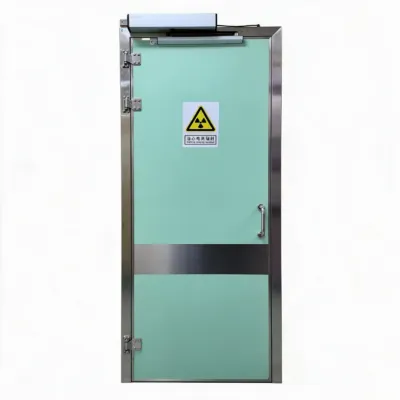
Explain lead-lined construction, lead equivalence, lead-free alternatives and shielding design. Emphasise project-specific calculations and verified test results.
Part IV. Manufacturing Processes and Quality Assurance
Chapter 16. Medical Door Design and Engineering Workflow
Describe engineering drawings, material selection, CNC cutting, sheet-metal bending, forming, reinforcement and dimensional planning for customised doors.
Chapter 17. Assembly, Welding and Surface Finishing
Explain door fabrication, welding, core installation, assembly and coating processes. Identify common defects and essential manufacturing quality checks.
Chapter 18. Automatic Door System Integration
Explain motor installation, controller configuration, sensor coordination, load matching and safety protection. Cover functional checks for automatic door systems.
Chapter 19. Factory Quality Control and Product Testing
Describe incoming inspection, dimensional checks, weld quality, coating inspection, operational testing, durability evaluation and traceable quality records.
Part V. Types of Steel Medical and Cleanroom Doors
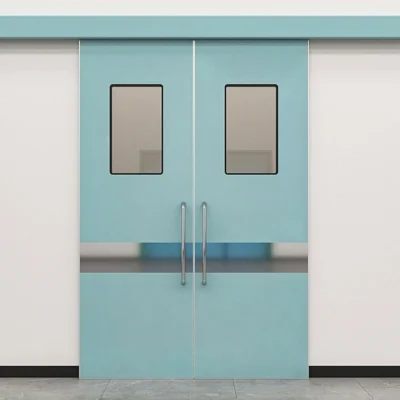
Chapter 20. Manual Steel Medical Doors
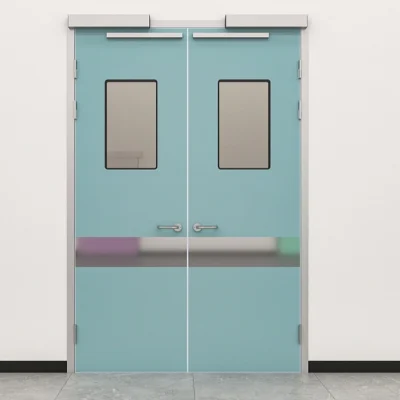
Introduce single- and double-leaf doors, single- and double-action configurations, hinges, locks and closers. Explain selection for different healthcare spaces.
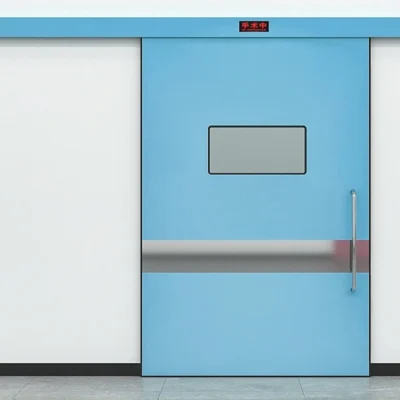
Chapter 21. Automatic Sliding Medical Doors
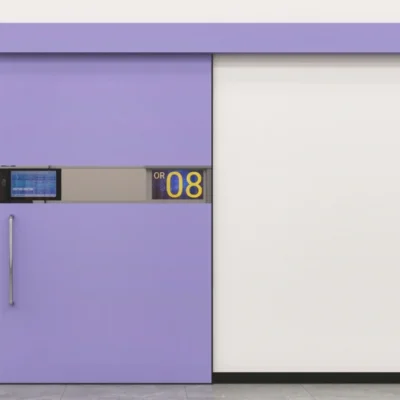
Describe sliding door configurations, drive motors, controllers, sensors and access control. Explain selection based on opening width, door weight, traffic and safety.
Chapter 22. Hermetic Sliding Doors for Operating Rooms
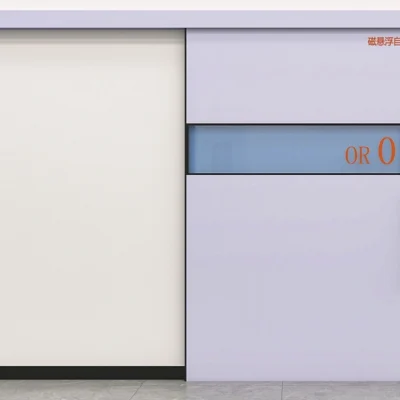
Explain hermetic construction, perimeter seals, automatic bottom seals and modular wall integration. Distinguish sealing features from verified leakage performance.
Chapter 23. Automatic Folding and Swing Doors
Compare automatic folding and swing doors by mechanism, space requirements, safety features and applications. Explain operator selection and accessibility considerations.
Chapter 24. Cleanroom Doors and Special Configurations
Cover flush steel doors, sealed doors, interlocks and airlocks. Explain cleanability, pressure control, material compatibility and application-specific requirements.
Chapter 25. Radiation-Shielding, Fire-Rated and Security Doors
Compare radiation protection, fire resistance, smoke control and security functions. Explain their distinct engineering requirements, testing and certification evidence.
Part VI. Product Selection and System Configuration
Chapter 26. How to Select the Right Medical Door
Provide a selection framework covering application, materials, opening method, hygiene, sealing, durability, compliance and budget.
Chapter 27. Door Dimensions, Openings and Customisation
Explain nominal dimensions, frame size, structural openings and clear passage width. Cover site measurement, wall thickness and custom design coordination.
Chapter 28. Hardware, Automation and Access Control
Describe hinges, locks, closers, motors, sensors, controllers and interlocks. Explain compatibility, safety, access control and maintenance requirements.
Chapter 29. Sealing, Airtightness and Environmental Control
Explain perimeter gaskets, drop seals, thresholds and frame interfaces. Discuss air leakage, pressure control and the importance of defined testing criteria.
Part VII. European and US Standards, Compliance and Testing
Chapter 30. European Standards for Medical and Cleanroom Doors
Explain relevant EN standards for automatic doors, internal doorsets, fire resistance and smoke leakage, alongside ISO 14644. Verify scope, editions and EU regulatory applicability.
Chapter 31. US Standards and Regulatory Considerations
Explain relevant ANSI/BHMA, NFPA and UL standards for automatic doors, hardware, fire protection and air leakage. Distinguish standards from applicable codes and legal requirements.
Chapter 32. Performance Testing and Compliance Documentation
Cover dimensional accuracy, durability, operating safety, air leakage, fire resistance, radiation shielding and electrical safety. Explain test evidence and avoid unsupported limits.
Part VIII. Installation, Commissioning and Maintenance
Chapter 33. Site Preparation and Door Installation
Describe site surveys, opening checks, frame fixing, alignment, sealing and electrical connections. Explain common installation defects and preventive measures.
Chapter 34. Commissioning and On-Site Acceptance
Provide commissioning checks for manual and automatic doors, including sensors, controls, sealing and specialised performance. Explain acceptance records and formal testing.
Chapter 35. Maintenance, Troubleshooting and Service Life
Explain routine cleaning, hardware and seal inspection, motor maintenance and common faults. Provide practical troubleshooting guidance and preventive maintenance recommendations.
Part IX. Export Procurement and Manufacturing Cooperation
Chapter 36. Medical Door Specifications and Procurement
Explain door schedules, quotation requirements, supplier evaluation, compliance documents and total cost of ownership. Provide a practical procurement checklist.
Chapter 37. OEM, ODM and Custom Manufacturing for Export
Describe customised production, branding, technical approval, quality inspection, packaging and export documentation. Explain buyer–manufacturer coordination.
Chapter 38. Frequently Asked Questions and Technical Reference
Answer common technical and purchasing questions. Include a glossary, specification checklist and practical references, linking readers to relevant chapters.
Part X. Applications and Project Case Studies
Chapter 39. Operating Rooms and Modular Operating Rooms
Explain operating room door selection, hermetic sealing, clear openings, equipment access and integration with modular walls, HVAC and access control.
Chapter 40. Intensive Care, Isolation and Patient Care Areas
Describe door requirements for ICUs, isolation rooms, emergency departments and wards. Cover accessibility, cleanability, privacy, traffic and pressure control.
Chapter 41. Laboratories, Cleanrooms and Pharmaceutical Facilities
Explain door selection for laboratories and controlled environments, focusing on chemical compatibility, cleanability, sealing, pressure differentials and airlocks.
Chapter 42. Radiology and Other Specialised Healthcare Areas
Describe radiation-shielding doors for X-ray, CT and radiotherapy facilities, alongside doors for sterile processing and medical utility areas.
Chapter 43. Medical Door Project Case Studies
Present verified projects covering requirements, challenges, door configurations, solutions and outcomes. Use authentic project data and avoid unsupported claims.
Chapter 44. Project Delivery and International Cooperation
Explain coordination among manufacturers, architects, contractors and distributors. Cover technical approvals, production planning, inspection, shipment and after-sales support.