Chapter 20. Manual Steel Medical Doors
Not every hospital door needs a motor. In fact, most doors in a healthcare facility — ward rooms, stores, offices, many corridors — are manual, and choosing the wrong configuration or hardware grade is one of the most common specification errors. How should you match a manual steel medical door to its space?
Single-Leaf vs Double-Leaf
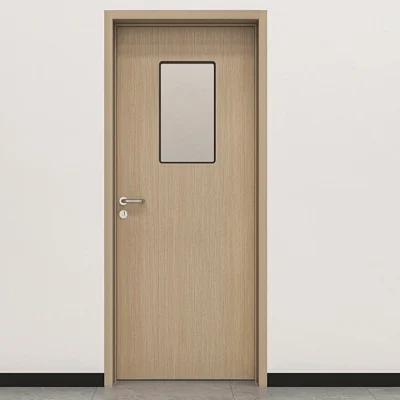
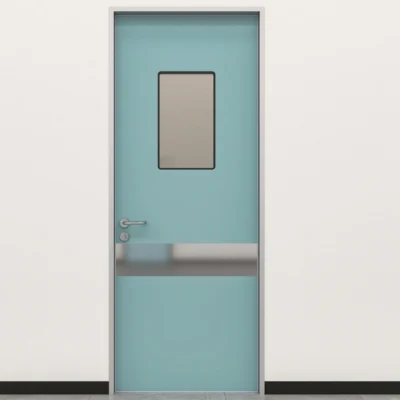
- Single-leaf doors serve rooms: patient rooms, offices, utility spaces. Clear opening widths of 900–1000 mm suit beds and wheelchairs; narrower leaves are acceptable only for cupboards and risers.
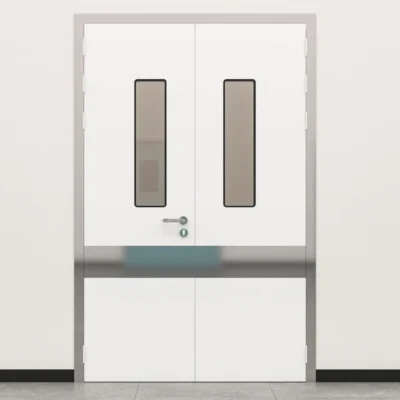
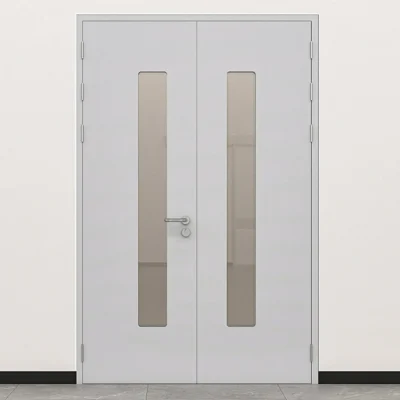
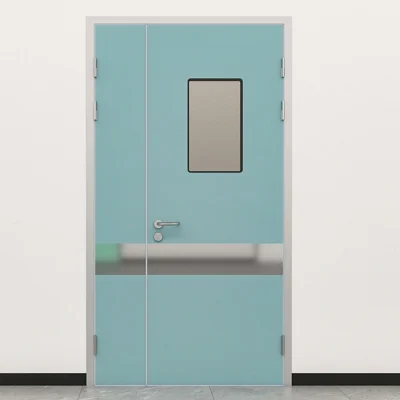
- Double-leaf (pair) doors serve corridors and equipment routes where the full opening is needed for beds, trolleys, and imaging equipment. Healthcare doorset practice is to provide corridor doors as FD30/FD60-rated single or double swing sets depending on the compartmentation plan. Double-leaf doors need a closing sequence selector on rebated pairs so the inactive leaf closes first — otherwise the latch leaf bounces off the rebate and the door never seals.
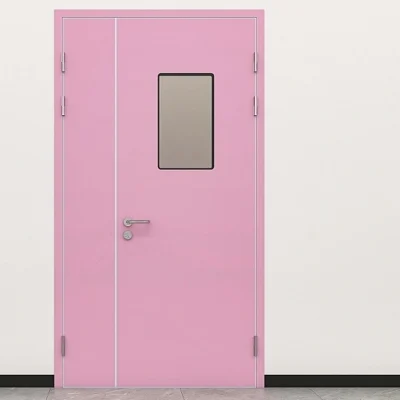
Trade-off: a double door gives a big opening but doubles the hardware, the closing coordination, and the points of seal failure. If traffic rarely needs the full width, a leaf-and-a-half (unequal pair) is often the better answer — daily traffic uses the large leaf; the small leaf opens only for equipment moves.
Single-Action vs Double-Action
- Single-action (one-way swing) is the default: the door closes against a frame stop with a seal, latches, and can carry fire and acoustic ratings. Used for patient rooms, fire compartments, isolation anterooms.
- Double-action (two-way swing) doors hang on double-acting pivots or hinges giving roughly 100°+ of travel each way, letting staff push through with trolleys hands-free. They are standard in cross-corridor positions, kitchens, and theatre access routes where traffic flows both directions. Specialist door suppliers list double-swing configurations specifically for cross-corridor healthcare use, with FD30/FD60 fire-tested double-action sets available.
Limitation: double-action doors cannot latch conventionally, seal less well at the meeting edge and frame, and have poorer acoustic and smoke performance. Never use a double-action door where an airtight or high acoustic seal is required — that is what hermetic or single-action sealed doorsets are for.
Hardware Selection
Hinges
Hinges are graded by EN 1935, whose classification digits cover category of use, durability, test door mass, fire suitability, and corrosion resistance. Durability grades span from 10,000 cycles (light duty) up to 200,000 cycles, with test door mass up to 160 kg at the highest grades. For hospital doors:
- Specify grade 13–14 hinges (heavy duty, high cycle) on corridor and high-traffic doors; lighter grades are false economy — hinge wear shows up as leaf drop, frame rub, and failed latching.
- Note the standard's adjustment rule: door closers add effective loading, so the permitted leaf mass per hinge grade is reduced when a closer is fitted. Heavy steel medical leaves plus a closer routinely push you up a hinge grade.
- Fire doors require hinges with the fire-suitability grade (grade 1 fire rating in the EN 1935 code).
Locks and Latches
Mortise locks follow EN 12209, classifying category of use, durability, door mass suitability, and fire resistance. Healthcare specifics:
- Category of use matters most: corridor and public doors need the highest category (severe duty).
- Patient bathrooms and bedrooms need privacy/emergency-release functions staff can open from outside; anti-ligature furniture in mental health areas.
- On fire doors, the lock must carry the EN 12209 fire grade matching the doorset evidence — a non-rated lock voids the certification.
Door Closers
Closers are classified by EN 1154 power size 1–7, matched to door width and mass. Practical selection:
- Size from the door-width/mass tables, then select the next size up where doors face air pressure differentials — a common condition in hospitals with HVAC imbalance between wards and corridors; manufacturer guidance explicitly advises upsizing for doors subject to draughts.
- Adjustable-power closers (e.g., EN 2–5 or 3–6) give commissioning flexibility and are the practical default for projects with mixed door sizes.
- Specify backcheck on doors that can be flung open against walls or equipment, and delayed action where trolley traffic needs time to pass.
- Accessibility conflict: a closer strong enough for the seal and pressure differential can exceed opening-force limits for frail patients. Options: reduce seal friction, rebalance HVAC pressure, or use free-swing closers with electromagnetic hold-open tied to the fire alarm on patient bedroom doors.
Matching Configuration to Healthcare Spaces
| Space | Leaf | Action | Key hardware notes |
|---|---|---|---|
| Patient bedroom | Single | Single | EN 1154 closer sized for accessibility; privacy lock; acoustic seals |
| Ward corridor | Double or leaf-and-a-half | Single (fire) / Double (cross-corridor) | Sequence selector, grade 13–14 hinges, hold-open devices |
| Theatre/anteroom | Single, sealed | Single | Hermetic-grade seals, no double-action; interlock where paired |
| Isolation room | Single, sealed | Single | Closer sized for pressure differential; monitor alarm integration |
| Store/utility | Single | Single | Basic grade hardware acceptable; still fire-rated where compartmented |
| Mental health unit | Single | Single | Anti-ligature hinges/handles, en-suite emergency access |
Common Mistakes
- Double-action doors specified where smoke or acoustic sealing was needed.
- Closers sized to the bare leaf width without upsizing for pressure differentials — doors then never latch.
- Undergraded hinges on heavy steel leaves with closers, causing leaf drop within a year.
- Non-fire-rated hardware substituted during procurement, voiding the doorset certification.
Practical Checklist
- Confirm fire/acoustic/airtightness rating of each door location first — it constrains everything else.
- Choose leaf configuration from traffic type, not from opening size alone.
- Grade hinges by EN 1935 with the closer allowance applied.
- Size closers by EN 1154 with +1 size for pressure differentials.
- Verify every hardware item's fire grade against the doorset test evidence.