An Improved Photolysis Filter (Utility Model CN 210302875 U)
The present utility model provides an improved photolysis filter, comprising a housing. The housing comprises an air inlet end and an air outlet end. A first metal partition layer, a first...
Abstract
The present utility model provides an improved photolysis filter, comprising a housing. The housing comprises an air inlet end and an air outlet end. A first metal partition layer, a first pleated fabric layer, a filter element layer, a water-absorbing layer, a photolysis layer, a photocatalyst filter layer, a second pleated fabric layer and a second metal partition layer are sequentially provided in the housing. The photolysis layer comprises an outer frame, a plurality of first reflection hoods and second reflection hoods fixed in the housing, and ultraviolet lamps fixed to inner sides of the first reflection hoods. The first reflection hoods and the second reflection hoods are staggered at intervals and are disposed opposite to each other. The photocatalyst filter layer comprises nylon cloth and nanoscale titanium dioxide particles coated on the nylon cloth. The filter provided by the present utility model has a good filtering effect and a good sterilization effect.
Patent Information
| Item | Detail |
|---|---|
| Issuing authority | National Intellectual Property Administration of the People’s Republic of China (CNIPA) |
| Document type | Utility Model Patent |
| Authorization publication number | CN 210302875 U |
| Authorization publication date | April 14, 2020 |
| Application number | 201920992502.5 |
| Filing date | June 28, 2019 |
| Patentee | Dongguan Pengchi Purification Technology Co., Ltd. |
| Address | Tangyilangwei Road, Tangjiao Village, Chashan Town, Dongguan City, Guangdong Province 523378, China |
| Inventors | Hu Guopeng |
| Patent agency | Dongguan Yongqiao Intellectual Property Agency (General Partnership) 44400 |
| Patent agent | He Xinhua |
| International Patent Classification (IPC) | B01D 46/12 (2006.01); A61L 9/20 (2006.01); B01D 46/54 (2006.01); B01D 46/52 (2006.01); B01D 53/86 (2006.01) |
| Title of utility model | An Improved Photolysis Filter |
Claims
-
An improved photolysis filter, comprising a housing (1), the housing (1) comprising an air inlet end (11) and an air outlet end (12), characterized in that a first metal partition layer (2), a first pleated fabric layer (3), a filter element layer (4), a water-absorbing layer (5), a photolysis layer (6), a photocatalyst filter layer (7), a second pleated fabric layer (8) and a second metal partition layer (9) are sequentially provided in the housing (1);
- the photolysis layer (6) comprises an outer frame (61), a plurality of first reflection hoods (62) and second reflection hoods (63) fixed in the housing (1), and ultraviolet lamps (64) fixed to inner sides of the first reflection hoods (62), and the first reflection hoods (62) and the second reflection hoods (63) are staggered at intervals and are disposed opposite to each other;
- the photocatalyst filter layer (7) comprises nylon cloth and nanoscale titanium dioxide particles coated on the nylon cloth.
-
The improved photolysis filter according to claim 1, characterized in that the first pleated fabric layer (3) and the second pleated fabric layer (8) are both made of polyurethane fabric.
-
The improved photolysis filter according to claim 1, characterized in that the filter element layer (4) is formed by stacking a plurality of porous polytetrafluoroethylene membranes.
-
The improved photolysis filter according to claim 1, characterized in that the water-absorbing layer (5) is made of porous sponge.
-
The improved photolysis filter according to claim 1, characterized in that a side face of the housing (1) is provided with a rectangular hole through which the outer frame (61) passes.
-
The improved photolysis filter according to claim 5, characterized in that a handle (611) is further connected to one side of the outer frame (61).
Description
TECHNICAL FIELD
[0001] The present utility model relates to the technical field of filters, and in particular to an improved photolysis filter.
BACKGROUND ART
[0002] An air filter is generally composed of filter layers and a frame, and air filters can be classified into multiple grades such as primary, intermediate and high-efficiency filters according to their filtering effects. Air filters are mainly used to capture particulate dust and various suspended matters, are widely applied in various air-conditioning equipment and air-conditioning systems, and are also used for high-level protection in multi-stage filtration systems. At present, in order to provide most air filters on the market with a sterilization function, an ultraviolet lamp is generally added at the top of the inner side, and sterilization is performed by means of ultraviolet rays. With such a structure, the sterilization effect is relatively good at positions close to the ultraviolet lamp, but relatively poor at positions far away from the ultraviolet lamp, where bacteria easily pass through, and the desired sterilization effect cannot be achieved overall.
SUMMARY OF THE UTILITY MODEL
[0003] In view of the above problems, the present utility model provides an improved photolysis filter, which has a good filtering effect and a good sterilization effect.
[0004] To achieve the above object, the present utility model solves the above problem through the following technical solutions:
[0005] An improved photolysis filter comprises a housing. The housing comprises an air inlet end and an air outlet end. A first metal partition layer, a first pleated fabric layer, a filter element layer, a water-absorbing layer, a photolysis layer, a photocatalyst filter layer, a second pleated fabric layer and a second metal partition layer are sequentially provided in the housing. The photolysis layer comprises an outer frame, a plurality of first reflection hoods and second reflection hoods fixed in the housing, and ultraviolet lamps fixed to inner sides of the first reflection hoods. The first reflection hoods and the second reflection hoods are staggered at intervals and are disposed opposite to each other. The photocatalyst filter layer comprises nylon cloth and nanoscale titanium dioxide particles coated on the nylon cloth.
[0006] Specifically, the first pleated fabric layer and the second pleated fabric layer are both made of polyurethane fabric.
[0007] Specifically, the filter element layer is formed by stacking a plurality of porous polytetrafluoroethylene membranes.
[0008] Specifically, the water-absorbing layer is made of porous sponge.
[0009] Specifically, a side face of the housing is provided with a rectangular hole through which the outer frame passes.
[0010] Specifically, a handle is further connected to one side of the outer frame.
[0011] The beneficial effects of the present utility model are as follows:
[0012] First, the filter of the present utility model is additionally provided with a photolysis layer having a plurality of ultraviolet lamps therein, and the first reflection hoods and the second reflection hoods are arranged in a staggered, inverted and opposite manner, so that gas can only pass through front sides of the ultraviolet lamps. Under the photolysis of relatively strong ultraviolet rays, most bacteria are killed. A photocatalyst filter layer is additionally provided on one side of the photolysis layer; under the action of the ultraviolet rays, the nanoscale titanium dioxide particles produce a strong catalytic degradation function, which can effectively degrade toxic and harmful gases in the air and effectively kill various bacteria;
[0013] Second, the first pleated fabric layer, the filter element layer and the second pleated fabric layer are added, and the multiple filter layers prevent most dust from passing through, providing an excellent filtering effect. Moreover, the filter element layer is formed by stacking a plurality of porous polytetrafluoroethylene membranes, and the porous polytetrafluoroethylene membranes have excellent hydrophobic and oleophobic properties, so that oil stains have poor adhesion thereto, facilitating later cleaning of the oil stains.
BRIEF DESCRIPTION OF THE DRAWINGS
[0014] FIG. 1 is a structural schematic view of an improved photolysis filter according to the present utility model.
[0015] FIG. 2 is a cross-sectional view taken along plane A-A in FIG. 1.
[0016] FIG. 3 is an enlarged view of part B in FIG. 2.
[0017] FIG. 4 is a structural schematic view of the photolysis layer in the present utility model.
[0018] The reference numerals are as follows: housing 1; air inlet end 11; air outlet end 12; first metal partition layer 2; first pleated fabric layer 3; filter element layer 4; water-absorbing layer 5; photolysis layer 6; outer frame 61; handle 611; first reflection hoods 62; second reflection hoods 63; ultraviolet lamps 64; photocatalyst filter layer 7; second pleated fabric layer 8; second metal partition layer 9.
DETAILED DESCRIPTION OF EMBODIMENTS
[0019] The present utility model will be described in further detail below in conjunction with the embodiments and the accompanying drawings, but the embodiments of the present utility model are not limited thereto.
[0020] As shown in FIGS. 1-4:
[0021] An improved photolysis filter comprises a housing 1. The housing 1 comprises an air inlet end 11 and an air outlet end 12. A first metal partition layer 2, a first pleated fabric layer 3, a filter element layer 4, a water-absorbing layer 5, a photolysis layer 6, a photocatalyst filter layer 7, a second pleated fabric layer 8 and a second metal partition layer 9 are sequentially provided in the housing 1. The photolysis layer 6 comprises an outer frame 61, a plurality of first reflection hoods 62 and second reflection hoods 63 fixed in the housing 1, and ultraviolet lamps 64 fixed to inner sides of the first reflection hoods 62. The first reflection hoods 62 and the second reflection hoods 63 are staggered at intervals and are disposed opposite to each other. The photocatalyst filter layer 7 comprises nylon cloth and nanoscale titanium dioxide particles coated on the nylon cloth. The arrangement of the first reflection hoods 62, the second reflection hoods 63 and the ultraviolet lamps 64 enables gas to pass only through front sides of the ultraviolet lamps 64, and most bacteria are killed under the photolysis of relatively strong ultraviolet rays. In addition, under the action of ultraviolet rays, the nanoscale titanium dioxide particles in the photocatalyst filter layer 7 produce a strong catalytic degradation function, which can effectively degrade toxic and harmful gases in the air and effectively kill various bacteria.
[0022] Preferably, the first pleated fabric layer 3 and the second pleated fabric layer 8 are both made of polyurethane fabric.
[0023] Preferably, the filter element layer 4 is formed by stacking a plurality of porous polytetrafluoroethylene membranes. The porous polytetrafluoroethylene membranes have excellent hydrophobic and oleophobic properties, so that oil stains have poor adhesion thereto, facilitating later cleaning of the oil stains.
[0024] Preferably, in order to keep the photolysis layer 6 dry and prevent excessive water from accumulating near the ultraviolet lamps 64 and affecting the normal operation of the ultraviolet lamps 64, the water-absorbing layer 5 is made of porous sponge.
[0025] Preferably, a side face of the housing 1 is provided with a rectangular hole through which the outer frame 61 passes.
[0026] Preferably, a handle 611 is further connected to one side of the outer frame 61, and the photolysis layer 6 can be pulled out from the rectangular hole through the handle 611, facilitating later cleaning.
[0027] The above embodiments only illustrate one embodiment of the present utility model, and the description thereof is relatively specific and detailed, but it should not be construed as limiting the patent scope of the present utility model. It should be noted that those of ordinary skill in the art may make various modifications and improvements without departing from the concept of the present utility model, and these all fall within the protection scope of the present utility model. Therefore, the patent protection scope of the present utility model shall be subject to the appended claims.
Drawings
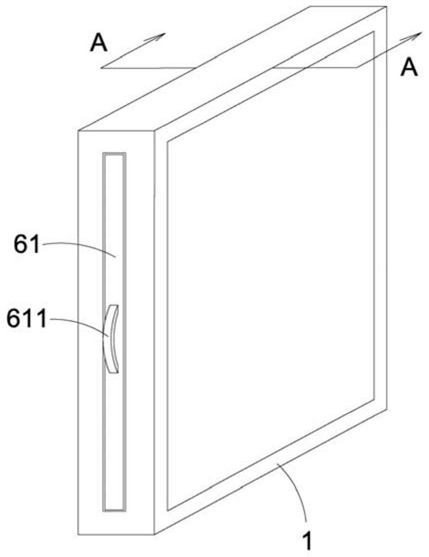 FIG. 1 — Structural schematic view of the improved photolysis filter
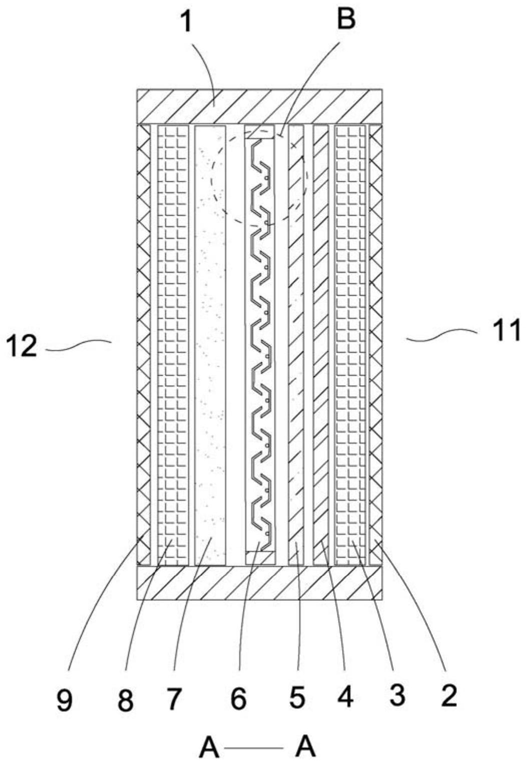 FIG. 2 — Cross-sectional view taken along plane A-A in FIG. 1
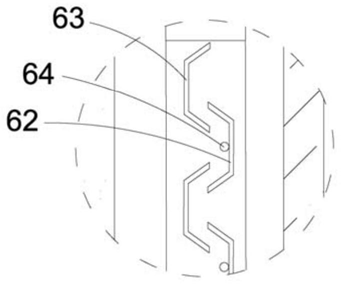 FIG. 3 — Enlarged view of part B in FIG. 2
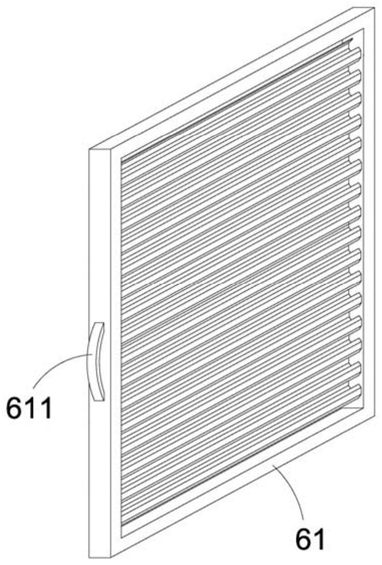 FIG. 4 — Structural schematic view of the photolysis layer