A Sealed Cleanroom Door Structure (Utility Model CN 210317061 U)
The present utility model provides a sealed cleanroom door structure, comprising an inner door panel and an outer door panel that are fixedly connected. Panel surfaces of the inner door...
Abstract
The present utility model provides a sealed cleanroom door structure, comprising an inner door panel and an outer door panel that are fixedly connected. Panel surfaces of the inner door panel and the outer door panel are opposed and in close contact to form a joint surface, and a line connecting a center of the inner door panel and a center of the outer door panel is perpendicular to the joint surface. The length and width of the inner door panel are a and b respectively, and the length and width of the outer door panel are A and B respectively, where a<A and b<B. An inner window opening is provided in the inner door panel, and an outer window opening is provided in the outer door panel. A line connecting centers of the inner window opening and the outer window opening defines a window-opening axis, and the window-opening axis is perpendicular to the joint surface. The length and width of the inner window opening are h and i respectively, and the length and width of the outer window opening are H and I respectively, where h>H and i>I. The present utility model can ensure that a non-linear bent seam structure is formed between the door body and a door frame, and has good sealing performance. A window-opening structure in which a glass plate can be embedded is provided on the door body, so that the door body has an observation function. Moreover, an inner wall of the window-opening structure is stepped, which can effectively prevent contaminants from passing through.
Patent Information
| Item | Detail |
|---|---|
| Issuing authority | National Intellectual Property Administration of the People’s Republic of China (CNIPA) |
| Document type | Utility Model Patent |
| Authorization publication number | CN 210317061 U |
| Authorization publication date | 2020-04-14 |
| Application number | 201920827630.4 |
| Filing date | 2019-05-31 |
| Patentee | Dongguan Pengchi Purification Technology Co., Ltd. |
| Address | Tangyilangwei Road, Tangjiao Village, Chashan Town, Dongguan City, Guangdong Province 523378, China |
| Inventors | Wang Haiou; Hu Guopeng; Li Dexiong |
| Patent agency | Dongguan Yongqiao Intellectual Property Agency (General Partnership) 44400 |
| Patent agent | He Xinhua |
| International Patent Classification (IPC) | E06B 5/10(2006.01); E06B 3/70(2006.01); E06B 7/30(2006.01); E06B 3/36(2006.01); E06B 7/16(2006.01); E05B 1/00(2006.01) |
| Title of utility model | A Sealed Cleanroom Door Structure |
Claims
-
A sealed cleanroom door structure, comprising an inner door panel (10) and an outer door panel (20) that are fixedly connected, characterized in that:
- panel surfaces of the inner door panel (10) and the outer door panel (20) are opposed and in close contact to form a joint surface;
- a line connecting a center of the inner door panel (10) and a center of the outer door panel (20) is perpendicular to the joint surface;
- the length and width of the inner door panel (10) are a and b respectively;
- the length and width of the outer door panel (20) are A and B respectively, where a<A and b<B;
- the inner door panel (10) is provided with an inner window opening (11);
- the outer door panel (20) is provided with an outer window opening (21);
- a line connecting centers of the inner window opening (11) and the outer window opening (21) defines a window-opening axis;
- the window-opening axis is perpendicular to the joint surface;
- the length and width of the inner window opening (11) are h and i respectively; and
- the length and width of the outer window opening (21) are H and I respectively, where h>H and i>I.
-
The sealed cleanroom door structure according to claim 1, characterized in that the inner door panel (10) and the outer door panel (20) are both hollow panels.
-
The sealed cleanroom door structure according to claim 1, characterized in that a thickness of the outer door panel (20) is D and a thickness of the inner door panel (10) is d, where D>d; a lock body (30) is disposed in the outer door panel (20), a handle (31) is connected to each of two sides of the lock body (30), and the two handles (31) protrude from a surface of the inner door panel (10) and a surface of the outer door panel (20), respectively.
-
The sealed cleanroom door structure according to claim 1, characterized in that a thickness of the outer door panel (20) is D and a thickness of the inner door panel (10) is d, where D<d; a lock body (30) is disposed in the inner door panel (10), a handle (31) is connected to each of two sides of the lock body (30), and the two handles (31) protrude from a surface of the inner door panel (10) and a surface of the outer door panel (20), respectively.
-
The sealed cleanroom door structure according to claim 1, characterized in that a sealing rubber frame (40) is fitted over an exterior of the inner door panel (10).
-
The sealed cleanroom door structure according to claim 5, characterized in that the sealing rubber frame (40) is a thin-sheet frame, and the sealing rubber frame (40) is in close contact with a surface of the outer door panel (20) adjacent to the inner door panel (10).
Description
TECHNICAL FIELD
[0001] The present utility model relates to door structures, and specifically discloses a sealed cleanroom door structure.
BACKGROUND ART
[0002] A door generally refers to an entrance/exit of a certain limited space. A door body is a device installed at the entrance/exit that can be opened and closed, and is an entity that partitions a limited space.
[0003] A door body is generally used in cooperation with a door frame, and after the door body is fastened to the door frame, a partition function can be achieved. The simplest door body and door frame are unrestricted, and the door body can be pushed in both directions on two sides of the door frame; one provided with a lock body structure restricts the relative position between the door body and the door frame through the lock body structure. A cleanroom door is a door body structure used to partition a sterile, pollution-free environment from a general external environment. In the prior art, cleanroom door bodies are all inserted directly into the door frame to achieve partitioning, but the linear gap between the cleanroom door body and the door frame is easily traversed by contaminants such as bacteria, resulting in poor sealing performance.
SUMMARY OF THE UTILITY MODEL
[0004] Based on the above, it is necessary, in addressing the problems of the prior art, to provide a sealed cleanroom door structure, which has good sealing performance and can effectively block contaminants from passing through.
[0005] To solve the problems of the prior art, the present utility model discloses a sealed cleanroom door structure, comprising an inner door panel and an outer door panel that are fixedly connected. The panel surfaces of the inner door panel and the outer door panel are opposed and in close contact to form a joint surface. The line connecting the center of the inner door panel and the center of the outer door panel is perpendicular to the joint surface. The length and width of the inner door panel are a and b respectively, and the length and width of the outer door panel are A and B respectively, where a<A and b<B. The inner door panel is provided with an inner window opening, and the outer door panel is provided with an outer window opening. The line connecting the centers of the inner window opening and the outer window opening defines a window-opening axis, and the window-opening axis is perpendicular to the joint surface. The length and width of the inner window opening are h and i respectively, and the length and width of the outer window opening are H and I respectively, where h>H and i>I.
[0006] Further, the inner door panel and the outer door panel are both hollow panels.
[0007] Further, the thickness of the outer door panel is D and the thickness of the inner door panel is d, where D>d. A lock body is disposed in the outer door panel, a handle is connected to each of two sides of the lock body, and the two handles protrude from the surface of the inner door panel and the surface of the outer door panel, respectively.
[0008] Further, the thickness of the outer door panel is D and the thickness of the inner door panel is d, where D<d. A lock body is disposed in the inner door panel, a handle is connected to each of two sides of the lock body, and the two handles protrude from the surface of the inner door panel and the surface of the outer door panel, respectively.
[0009] Further, a sealing rubber frame is fitted over the exterior of the inner door panel.
[0010] Further, the sealing rubber frame is a thin-sheet frame, and the sealing rubber frame is in close contact with the surface of the outer door panel adjacent to the inner door panel.
[0011] The present utility model has the following beneficial effects: the present utility model discloses a sealed cleanroom door structure. An end surface of the door body is configured as a stepped structure, which can ensure that a non-linear bent seam structure is formed between the door body and the door frame, can effectively block contaminants such as bacteria and dust from passing through, has good sealing performance, and can prevent the purification effect in the limited space from being affected. In addition, a window-opening structure in which a glass plate can be embedded is provided on the door body, so that the door body has an observation function; and the inner wall of the window-opening structure is stepped, which can effectively prevent contaminants from passing through the window-opening structure.
BRIEF DESCRIPTION OF THE DRAWINGS
[0012] FIG. 1 is a schematic perspective structural view of the present utility model.
[0013] FIG. 2 is a schematic perspective structural view of another embodiment of the present utility model.
[0014] The reference numerals are as follows: inner door panel (10), inner window opening (11), outer door panel (20), outer window opening (21), lock body (30), handle (31), and sealing rubber frame (40).
DETAILED DESCRIPTION OF EMBODIMENTS
[0015] In order to further understand the features, technical means, and specific objects and functions achieved by the present utility model, the present utility model is described in further detail below with reference to the accompanying drawings and specific embodiments.
[0016] Reference is made to FIGS. 1 and 2.
[0017] An embodiment of the present utility model discloses a sealed cleanroom door structure, comprising an inner door panel (10) and an outer door panel (20) that are fixedly connected. The inner door panel (10) and the outer door panel (20) are connected by welding. The panel surfaces of the inner door panel (10) and the outer door panel (20) are opposed and in close contact to form a joint surface. The line connecting the center of the inner door panel (10) and the center of the outer door panel (20) is perpendicular to the joint surface, i.e., the center positions of the inner door panel (10) and the outer door panel (20) correspond to each other. The length and width of the inner door panel (10) are a and b respectively, and the length and width of the outer door panel (20) are A and B respectively, where a<A and b<B. The shapes of the inner door panel (10) and the outer door panel (20) correspond and match; their lengths extend in the same direction, and their widths also extend in the same direction. The panel surface area of the outer door panel (20) is greater than the panel surface area of the inner door panel (10), and the outer door panel (20) protrudes beyond an end surface of the inner door panel (10). The end surfaces of the inner door panel (10) and the outer door panel (20) form a stepped structure, and a cross section of the door structure formed between the inner door panel (10) and the outer door panel (20) has a convex profile. The inner door panel (10) is provided with an inner window opening (11), and the outer door panel (20) is provided with an outer window opening (21). The line connecting the centers of the inner window opening (11) and the outer window opening (21) defines a window-opening axis, and the window-opening axis is perpendicular to the joint surface, i.e., the center positions of the inner window opening (11) and the outer window opening (21) correspond to each other. The length and width of the inner window opening (11) are h and i respectively, and the length and width of the outer window opening (21) are H and I respectively, where h>H and i>I, i.e., the area of the inner window opening (11) is greater than the area of the outer window opening (21), which can effectively ensure the sealing performance between the glass plate and the outer door panel (20).
[0018] When installing the glass plate, a glass plate having a shape and size matching those of the inner window opening (11) is used, and the glass plate and the outer door panel (20) are connected by a material such as glass cement. The area of the glass plate is greater than the area of the outer window opening (21), and the outer door panel (20) can effectively limit the position of the glass plate and provide a seal thereat, which can effectively improve the sealing performance of the overall cleanroom door structure. When opening and closing the cleanroom door body, the stepped structure at the edge of the cleanroom door body can effectively fasten with the door frame, and the gap between the door frame and the cleanroom door body is a bent, non-linear structure, which can effectively improve the sealing performance between the cleanroom door body and the door frame, thereby effectively preventing contaminants such as bacteria and dust from passing from one side of the cleanroom door body and the door frame to the other side.
[0019] In the present utility model, the end surface of the door body is configured as a stepped structure, which can ensure that a non-linear bent seam structure is formed between the door body and the door frame, can effectively block contaminants such as bacteria and dust from passing through, has good sealing performance, and can prevent the purification effect in the limited space from being affected. In addition, a window-opening structure in which a glass plate can be embedded is provided on the door body, so that the door body has an observation function; and the inner wall of the window-opening structure is stepped, which can effectively prevent contaminants from passing through the window-opening structure.
[0020] In this embodiment, the inner door panel (10) and the outer door panel (20) are both hollow panels. The hollow panel structure can effectively save material and, at the same time, reduce the load on the connecting structure when opening and closing the door, which can effectively prolong the service life.
[0021] In this embodiment, the thickness of the outer door panel (20) is D, and as shown in FIG. 1, the thickness of the inner door panel (10) is d, where D>d. A lock body (30) is disposed in the outer door panel (20), a handle (31) is connected to each of two sides of the lock body (30), and the two handles (31) protrude from the surface of the inner door panel (10) and the surface of the outer door panel (20), respectively. An inner frame of the door frame has a stepped structure cooperating with the end surface of the cleanroom door body. The locking force acts mainly on the outer door panel (20), and the gap between the door frame and the cleanroom door body is zigzag-shaped, which can effectively block contaminants from passing through.
[0022] In this embodiment, the thickness of the outer door panel (20) is D, and as shown in FIG. 2, the thickness of the inner door panel (10) is d, where D<d. A lock body (30) is disposed in the inner door panel (10), a handle (31) is connected to each of two sides of the lock body (30), and the two handles (31) protrude from the surface of the inner door panel (10) and the surface of the outer door panel (20), respectively. The door frame may have a structure in which the cross section of a frame strip is rectangular. The locking force acts mainly on the inner door panel (10), and the gap between the door frame and the cleanroom door body is L-shaped, which can effectively block contaminants from passing through.
[0023] In this embodiment, a sealing rubber frame (40) is fitted over the exterior of the inner door panel (10). Preferably, the sealing rubber frame (40) is a rubber frame, which can further improve the sealing performance between the cleanroom door body and the door frame.
[0024] Based on the above embodiments, the sealing rubber frame (40) is a thin-sheet frame, and the sealing rubber frame (40) is in close contact with the surface of the outer door panel (20) adjacent to the inner door panel (10), i.e., the surface of the sealing rubber frame (40) is attached to the surface of the outer door panel (20). When the door body is pushed outward for installation, this can effectively prevent the sealing rubber frame (40) from obstructing the opening and closing of the door, while ensuring the sealing performance.
[0025] The above embodiments only describe several embodiments of the present utility model, and the description thereof is relatively specific and detailed. However, this should not be construed as a limitation on the patent scope of the present utility model. It should be noted that, for a person of ordinary skill in the art, without departing from the concept of the present utility model, several modifications and improvements can be made, all of which fall within the protection scope of the present utility model. Therefore, the protection scope of the present utility model patent shall be defined by the appended claims.
Drawings
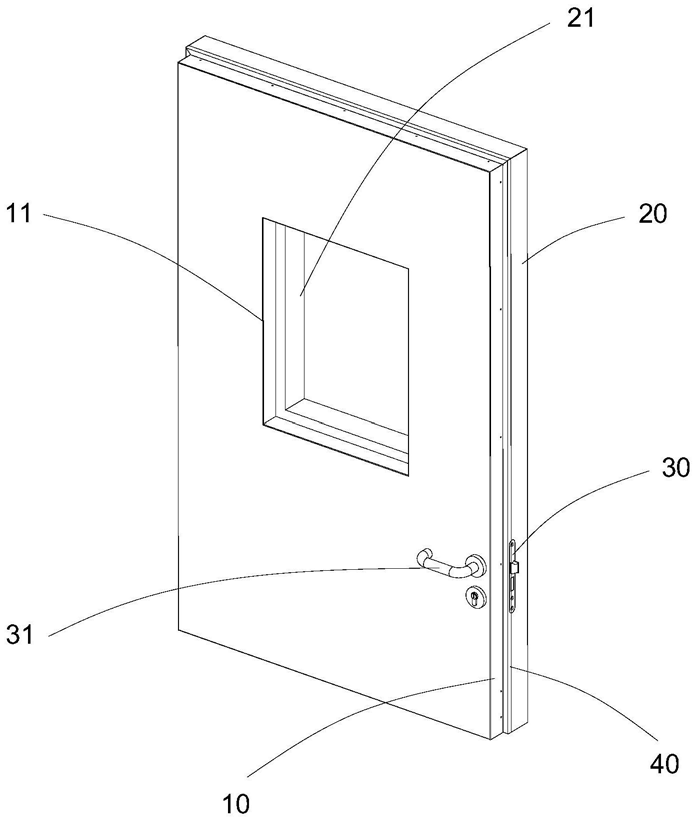 FIG. 1 — Schematic perspective structural view of the present utility model
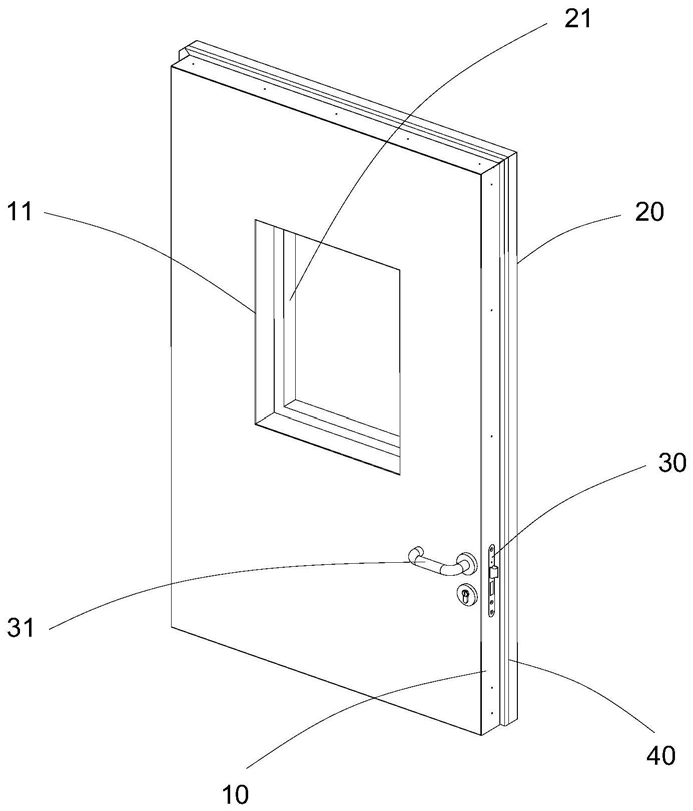 FIG. 2 — Schematic perspective structural view of another embodiment of the present utility model