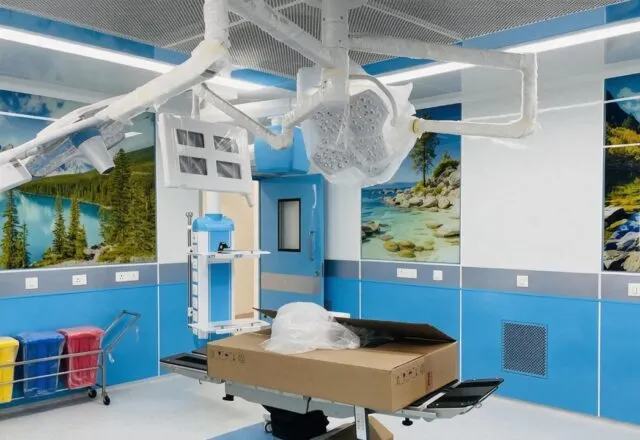
Modern healthcare construction is shifting away from traditional brick-and-mortar surgery suites toward modular operating rooms (MORs) — prefabricated, factory-engineered environments that can be installed, upgraded, and reconfigured with far less disruption than conventional construction. But “modular OR” is an umbrella term. Behind it lies a structured taxonomy based on wall materials, construction methods, cleanliness classes, and clinical specialties. This guide walks through each dimension of classification so planners, architects, and hospital administrators can make informed decisions.
1. Classification by Wall and Enclosure Material
The most common way the industry distinguishes modular ORs is by the material used for the wall and ceiling panel system. The choice directly affects durability, cleanability, infection control, and cost.
1.1 Stainless Steel Modular ORs
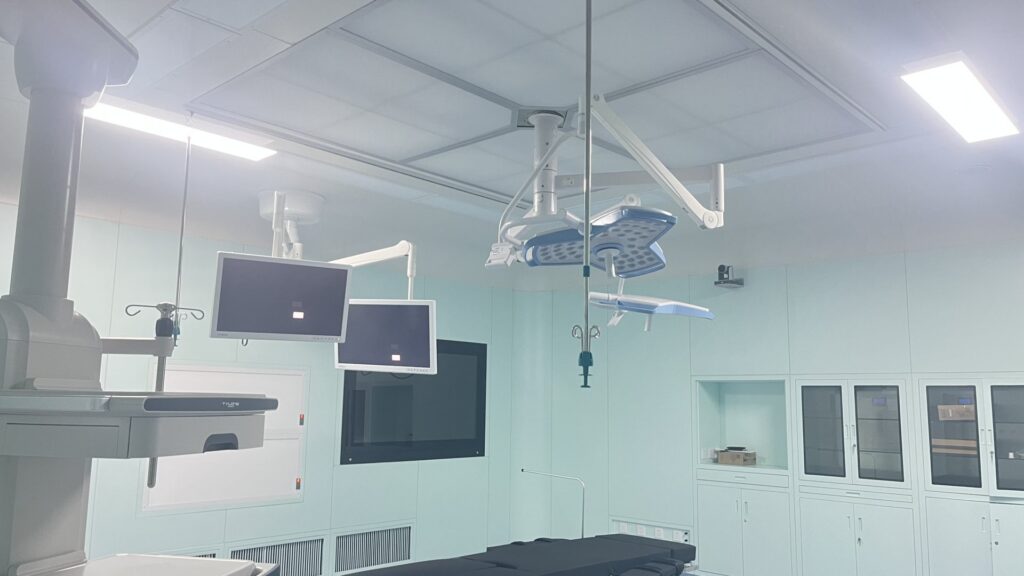
Stainless steel — often electrolytic galvanized steel with an antimicrobial powder coating — is the premium standard.
- Advantages: extreme durability, seamless welding, resistance to aggressive disinfectants, long service life (20+ years)
- Typical use: high-acuity surgical suites, transplant centers, facilities with strict infection-control protocols
- Trade-off: highest upfront cost
1.2 HPL (High-Pressure Laminate) Modular ORs
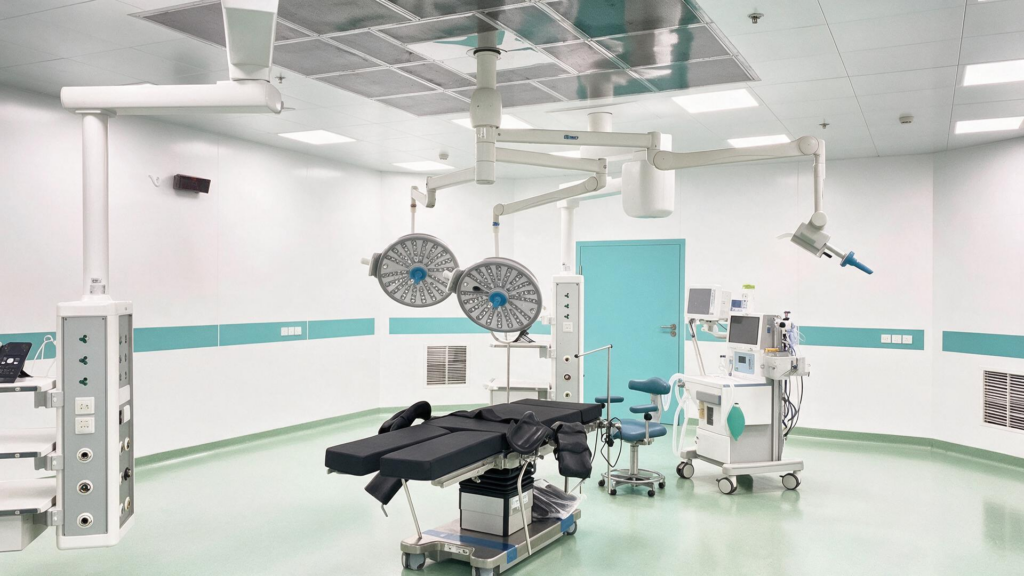
Antibacterial high-pressure laminate panels bonded to a solid core offer a cost-effective alternative.
- Advantages: wide range of colors and finishes, good impact resistance, lower cost than steel
- Typical use: general surgery, day-surgery centers, budget-conscious projects
- Trade-off: less resistant to deep abrasion; seams require careful detailing
1.3 Glass Modular ORs
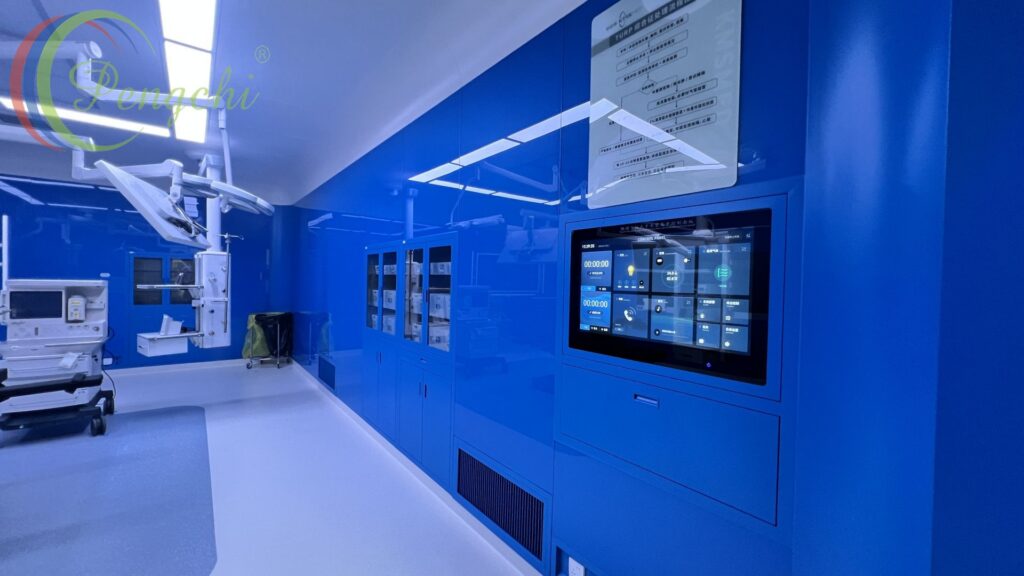
Tempered, flush-mounted glass wall panels create a smooth, pore-free surface.
- Advantages: visually open and modern, extremely easy to wipe down, chemically inert
- Typical use: hybrid ORs, teaching hospitals, flagship facilities — often mixed with stainless steel on other walls
- Trade-off: higher cost per panel, requires precise installation
1.4 Sandwich Panel (Cleanroom-Style) ORs
Rockwool, magnesium-oxide, or aluminum-honeycomb sandwich panels borrow from cleanroom construction practice.
- Advantages: fast installation, good thermal and acoustic insulation, lowest cost
- Typical use: rapid-deployment projects, secondary hospitals, temporary capacity
- Trade-off: lower impact resistance and perceived quality
1.5 Hybrid and Lead-Lined Configurations
Real projects frequently combine materials — for example, one glass feature wall with stainless steel elsewhere. ORs containing imaging equipment (C-arms, DSA, CT) require lead-lined panels for radiation shielding, forming a distinct sub-category.
2. Classification by Construction Method
Beyond materials, modular ORs differ in how they are built and delivered.
2.1 Prefabricated Modular ORs
Fully engineered room modules are manufactured off-site and assembled on-site. This approach minimizes hospital downtime — a decisive advantage when renovating inside a functioning surgical department.
2.2 Modular Wall and Ceiling Retrofit Systems
Instead of building a room from scratch, a modular envelope (wall panels, pressurized ceiling, hermetic doors, coved flooring) is installed inside an existing shell. This is the dominant method for upgrading legacy operating theatres to modern cleanliness standards.
2.3 Containerized and Mobile ORs
Self-contained surgical units built into ISO containers or trailer platforms. Used for military medicine, disaster response, rural outreach, and surge capacity during emergencies.
2.4 Off-Site Modular Healthcare Buildings
The OR arrives as one component of a complete volumetric modular building — entire surgical wings fabricated in a factory and crane-lifted into place, compliant with standards such as the UK’s HBN 26.
3. Classification by Cleanliness Class
Modular ORs are engineered to achieve specific airborne-particle and air-change standards, which vary by surgical risk.
3.1 International Classification
| Class | ISO Equivalent | Typical Procedures |
|---|---|---|
| Class I (ultra-clean) | ISO 5 | Joint replacement, organ transplant, implant surgery |
| Class II | ISO 6 | Cardiac, neuro, orthopedic surgery |
| Class III | ISO 7 | General surgery |
| Class IV | ISO 8 | Minor procedures, endoscopy |
3.2 Airflow Design
Higher classes are usually paired with laminar (unidirectional) airflow ceilings, while lower classes use turbulent mixing ventilation. The modular ceiling system is therefore as much a classification criterion as the walls.
4. Classification by Clinical Specialty
Finally, modular ORs are configured for specific disciplines:
- General surgery ORs — the baseline configuration
- Hybrid ORs — integrating fixed imaging (angiography, CT, or intraoperative MRI), requiring lead shielding, reinforced floors, and specialized boom layouts
- Cardiac, orthopedic, and neurosurgical ORs — larger footprints for equipment-heavy teams
- Ophthalmic and day-surgery ORs — compact, high-throughput rooms
- Supporting modular units — the same panel systems extend to ICUs, CSSDs (sterile supply departments), and isolation rooms, creating a unified modular clean department
5. How to Choose
Selecting among these types comes down to four questions:
- Clinical risk level — what cleanliness class do the procedures demand?
- Lifecycle cost — stainless steel costs more upfront but outlasts HPL and sandwich panels.
- Construction constraints — retrofit panel systems suit occupied hospitals; volumetric modules suit new builds.
- Future flexibility — modular systems shine when layouts must evolve; demountable panels allow reconfiguration without demolition.
Conclusion
The modular operating room is not a single product but a family of solutions: classified by enclosure material (stainless steel, HPL, glass, sandwich panel), by construction method (prefabricated, retrofit, containerized, volumetric), by cleanliness class (ISO 5–8), and by clinical specialty. Understanding this taxonomy lets healthcare projects match the right type to the right need — delivering safer, faster-built, and more adaptable surgical environments.